Blog portálu
Recommendation: If you want the broadest app catalog, native casting and regular voice features, opt for a Google-backed interface; if you prioritize manufacturer-tuned picture processing, lower entry price and vendor-specific apps, go with a built-in connected set. If you loved this article so you would like to acquire more info relating to 1xbet code i implore you to visit our web page. Expect Google-backed systems to offer 7,000+ dedicated streaming apps, native casting, and multi-account personalization; manufacturer platforms can deliver superior panel calibration and tuning at the same price point.
Performance and hardware guidance: Aim for at least 2 GB RAM and 8 GB flash storage for smooth app updates and background processes – many lower-tier models ship with 1–1.5 GB RAM and 4 GB flash, which fills up quickly. Measured input lag in modern displays: 10–25 ms in game mode for mid/high-end models, 30–60 ms in standard modes on older or budget sets. Prefer sets with HDMI 2.1 or low-latency game modes if you play competitively; look for eARC and Dolby Atmos passthrough for advanced sound setups.
Content ecosystem and features: Google-backed interfaces typically include built-in casting, Google Play app access, and wide third-party voice assistant integration; they allow sideloading in many cases and push updates 2–3 years with occasional feature refreshes. Manufacturer platforms vary: some support Dolby Vision/HDR10+, advanced local dimming and proprietary upscaling, but they often supply fewer third-party apps and shorter update commitments (commonly 1–2 years).
Privacy, updates and quick checklist: Account-linked platforms collect personalization data by default – disable usage sharing in settings if you want less telemetry. Before buying, verify: (1) declared OS update window (years), (2) available RAM/flash, (3) supported HDR formats and HDMI versions, (4) measured input lag in game mode, (5) voice assistant and smart-home compatibility, (6) app availability for services you use. For gamers and heavy app users, favor Google-backed units; for picture-first viewers or tight budgets, prefer manufacturer-tuned displays.
Platform Architecture
Recommendation: Adopt a modular, Linux-kernel-based reference stack with explicit partitioning (boot, vendor, system/product, data, recovery), A/B over-the-air updates with signed delta images, and hardware-backed key storage; spec baseline devices at minimum 2 GB RAM + 8 GB flash and mid/high models at 3–4 GB RAM + 16 GB flash or more.
Kernel and BSP: use a recent LTS kernel (5.10+), keep vendor board-support code upstreamed where possible, and rely on kernel-mode drivers for GPU, VPU and audio DSP. Enable CONFIG_KASAN and hardened usercopy/runtime mitigations during development; supply vendor drivers as separate vendor partition modules to simplify updates.

Media and graphics stack: provide a hardware-accelerated decoder pipeline supporting H.264, H.265 (HEVC), VP9 and AV1 through the VPU; expose DRM/KMS and EGL/OpenGL ES or Vulkan to the compositor. Implement a compositor that supports hardware overlays, buffer queuing with low-latency composition, and HDMI mode switching with CEC/HDMI-eARC passthrough for Bitstream (Dolby, DTS) and multichannel PCM.
Application model and packaging: deploy sandboxed, signed application packages that run in isolated processes with per-package capability restrictions and runtime permission checks. Use a managed runtime offering both AOT and JIT variants to balance cold-start time and memory footprint; require package signatures for installation and maintain an OEM app whitelist mechanism.
Update and rollback: use A/B system partitions to permit atomic updates and automatic rollback on failed boots. Deliver delta-compressed updates with cryptographic signatures, staged rollouts and health checks (boot success, watchdog alive, app startup) before marking an update successful.
Security primitives: require Secure Boot and verified boot chains, provide a hardware-backed keystore / TEE for DRM keys and credentials, enforce SELinux in enforcing mode with narrowly scoped domains, and run mandatory CVE patch cycles for kernel and media components. Isolate network-facing services behind privilege separation and rate-limited IPC.
Diagnostics and remote management: expose telemetry (CPU/memory/thermal, process crashes, kernel oops) to an MDM agent over a mutually authenticated channel; include secure remote logging, controlled remote shell for field engineers, and a software watchdog that can trigger recovery flows. Instrumentation should support sampling rates and size-limited rotation to protect storage.
Licensing and certification: plan for DRM license tiers (e.g., hardware L1 where required), audio codec licenses, and compliance tests; provide a compatibility test suite for third-party app developers and a documented HAL contract for vendor extensions to avoid fragmentation.
OEM checklist: publish a clear HAL/API map, pin a kernel LTS for security backports, enable hardware codecs and TEE on reference images, implement A/B OTA and rollback, validate DRM pipelines for 4K/HDR playback, and enforce signed app installation with runtime permissions.
OS core and licensing model
Recommendation: Prefer devices built on an open-source, Linux-based core with permissive licensing for maximum flexibility; opt for a vendor-locked, proprietary stack only if you require guaranteed hardware integration, vendor SLA and are prepared for licensing or revenue-share obligations.
Kernel and runtime: Most mainstream platforms use the Linux kernel (GPLv2) at the lowest level; middleware and app frameworks commonly carry permissive licences (Apache 2.0, MIT, BSD). Proprietary vendor stacks layer binary-only drivers and closed middleware on top of the kernel, increasing dependency on that vendor for bug fixes and feature exposure.
Licensing models explained: Open-source-permissive: no per-unit royalty, source access for modifications, easier sideloading of applications and third‑party integrations. Copyleft at kernel-layer (GPLv2) requires source for kernel modifications but does not force open-sourcing of userland under permissive licences. Proprietary/commercial: per-device fees, SDK/NDAs, app store access tied to a master agreement and potential revenue-share clauses.
Certification and app marketplace access: Access to major marketplaces or preloaded streaming clients typically requires passing a compatibility test suite and signing a manufacturer services agreement. Expect contractual constraints: mandatory apps, telemetry/diagnostics clauses, and minimum security/update commitments. Verify whether marketplace access is free, tied to a one-time certification fee, or subject to per-unit charges.
Security updates and support window: Require a defined update policy in procurement: minimum 24 months of security patches with monthly or quarterly cadence, and patch delivery SLA (e.g., critical fixes within 30 days). For open-source cores, patching responsibility usually falls to the OEM; for proprietary stacks, the vendor may guarantee updates but verify timelines and liability.
DRM, compliance and streaming readiness: Confirm supported DRM levels (e.g., Widevine L1 or equivalent) and whether certification is included. DRM certification is often separate from the OS licence and can add per-device costs or additional testing steps.
Developer and integrator impact: If you need custom apps, device management or deep hardware access, choose a permissively licensed core or a vendor that offers a full SDK and permissive redistribution rights. If you prefer out-of-the-box reliability and a single point of support, a commercial platform with clear SLAs can be acceptable – but budget for licensing, certification and potential revenue-sharing.
Procurement checklist (practical items to verify): licensing type (permissive vs proprietary), required compatibility tests, update cadence and duration, per-unit or one-time fees, DRM and marketplace certification status, source-access level for debugging and integration. Demand contract language specifying patch SLAs and liability for security incidents.
Repair work expenses, while variable depending on the mistake (common issues include failed hashboards, power supply units (PSUs), or cooling followers), typically continue to be substantially reduced than the price delta in between a new miner and a functional made use of one. A repaired miner, nevertheless, only needs to cover its reduced mixed price (acquisition cost + repair work cost). In conclusion, while the attraction of brand-new, high-hashrate miners is solid, the financial situation for fixing used cryptocurrency mining equipment is robust.
An expanding body of evidence recommends that tactical fixing and upkeep of used miners often presents a premium cost-efficient solution compared to purchasing brand-new tools. On the other hand, the acquisition expense of a used miner, also one calling for repair service, is normally a fraction of its initial price. Repair service costs, while variable depending on the mistake (common problems include stopped working hashboards, power supply devices (PSUs), or cooling fans), usually remain substantially reduced than the rate delta in between a new miner and a practical used one. A fixed Asic miner buy, nevertheless, just needs to cover its lower mixed price (purchase rate + repair service cost). In final thought, while the attraction of brand-new, high-hashrate miners is strong, the economic instance for fixing utilized cryptocurrency mining equipment is robust.
Recommendation: Install the latest official platform build available for your region via the system updater – the handset ships from factory on mobile OS level 10 with the vendor skin ColorOS 7.x, and the majority of global units have an official upgrade to mobile OS level 11 delivered as ColorOS 11.x.
How to confirm and apply the update: open Settings → About phone → Software update (or System update) to view the current platform number and security patch date. Back up user data, connect to a reliable Wi‑Fi network, ensure battery ≥50%, then apply the official OTA package. After installation check Settings → About phone for the new build name and the security patch timestamp.
Support and lifecycle notes: this midrange handset typically receives one full platform upgrade and ongoing security patches for roughly two years from launch; update availability and timing depend on region and carrier. If you require extended OS support, consider devices marketed with multi‑year upgrade promises or enroll in the manufacturer’s beta program where offered.
Custom firmware option: installing third‑party builds can provide newer platform releases sooner, but unlocking the bootloader and flashing unsigned images voids warranty and increases security risk. Prefer official OTA packages for stability and validated security fixes.
Stock Android version shipped with Oppo A54
Shipped firmware: ColorOS 7.2 built on Google's platform 10 with initial security patch level March 2021.
Immediate recommendation: Install the first over‑the‑air update available for the handset before adding apps or transferring sensitive data; this usually upgrades security definitions and fixes early firmware bugs.
Update checklist: 1) Back up user data. If you have any kind of inquiries relating to where and ways to use 1xbet login registration, you can call us at our own internet site. 2) Connect to stable Wi‑Fi. 3) Charge to at least 50%. 4) Free ~3 GB of internal storage. 5) Open Settings → Software Update → Check for updates and apply available OTA.
For major upgrades or if no OTA appears, download official firmware only from the vendor support site or carrier portal and follow the published flashing instructions. Avoid third‑party ROMs; improper images can permanently disable the device. Confirm support policy on the manufacturer page for guaranteed platform upgrades and patch cadence.
Factory Android release number by model
Verify the retail SKU sticker and the build string before buying: prefer units that left the factory with major release 11 or later for longer update support.
Where to find the factory release identifier: check the box sticker (model/IMEI), open Settings → About → Build number, or ask the seller for a picture of the original retail sticker. The initial platform release is usually embedded in the factory build name.
How to read build names: common OEM build formats include the SKU followed by an underscore and the major release digit (examples: CPH2xxx_10_xxx → shipped on major 10; CPH2xxx_11_xxx → shipped on major 11; CPH2xxx_12_xxx → shipped on major 12). When the build string contains "_11_" it means factory image = major 11, "_12_" = major 12, etc.
Use the IMEI or model code on the maker’s support site or on trusted firmware repositories to confirm the factory release for a specific SKU. Cross-check with changelogs for carrier or regional variants that sometimes ship on older platform levels.
Buying checklist: 1) require a photo of Settings → About showing model and build; 2) confirm the box sticker matches that model; 3) prioritize SKUs with factory major release 11+; 4) avoid listings that can’t prove original factory build if OS level and update longevity matter.
 Mining difficulty, readjusted every 2,016 blocks (approximately 2 weeks), makes certain block times stay near 10 minutes in spite of changing international hashrate. Mining swimming pools alleviate this unpredictability by combining hashrate and dispersing incentives proportionally. In significance, secondhand asic Miners mining 1 Bitcoin individually now requires years, making it possible just for industrial-scale procedures.
Mining trouble, adjusted every 2,016 blocks (approximately 2 weeks), makes certain block times remain near 10 mins in spite of rising and fall global hashrate. Mining pools reduce this uncertainty by combining hashrate and distributing benefits proportionally. In essence, mining 1 Bitcoin independently currently requires years, making it possible only for industrial-scale procedures.
Sign into the same account used by the title and open cloud save settings: check Google Play Games sign-in, then open Google Drive > Backups and look for an entry matching the app or publisher name; if a backup exists, import it from Drive or use the in-app cloud sync to pull the server copy to the device.
If the title used a third-party account (Facebook, publisher account, social login): log into that service on the same device or a PC, inspect linked devices and cloud backups in account settings, then trigger the app's sync or re-link function so the server-side save is applied to your local install.
If no cloud copy is present, stop using the phone to minimize overwrites and prepare for local extraction: enable USB debugging, connect to a PC, and use adb to export app save folders or run a desktop recovery utility (examples: DiskDigger, Dr.Fone); most desktop tools require root or elevated privileges, and 'adb backup' can help on compatible OS levels without root. Contact the publisher if the title keeps server-side snapshots.
Preventive configuration to avoid future loss: enable Play Games cloud saves and Google Drive backups, link titles to publisher or social accounts, perform periodic manual exports of save files to a PC, and schedule backups with a dedicated utility that writes archives to external storage or cloud.
Quick recovery checklist
Switch the device to Airplane mode and stop opening the app to minimize further write operations to internal storage.
Check the app's account-linked sync: open Settings → Account/Cloud Sync inside the app, verify the linked email, note the last sync timestamp, then sign into that same account on another device or web console to inspect server-side saves.
Look for built-in export or backup features inside the app and immediately export any available save files to an external SD card, USB OTG drive, or PC over USB.
If the device is rooted, create a full user-data image before any recovery attempts: on a computer with adb installed run: adb shell su -c "ls -l /dev/block/platform/*/by-name" to find the userdata block, then adb shell su -c "dd if=/dev/block/ of=/sdcard/userdata.img bs=4096" followed by adb pull /sdcard/userdata.img. Work from that image on a PC; do not run recovery tools directly on the live device.
If no root is available, use adb to pull accessible storage: adb pull /sdcard/ /path/to/pc and search the copied tree for folders named save, saves, backup, backups, or the app package name; copy any matching files to a safe location for analysis.
Run file-recovery utilities against the disk image on a PC: PhotoRec/TestDisk, Scalpel, or commercial suites. Configure scans for common save-file extensions (.sav, .json, .xml, .db) and export recovered files to a separate drive to avoid overwriting.
Collect precise diagnostics for developer support: device model, OS build number (Settings → About phone), app package name (found in Play/App store URL), last known account email, approximate timestamp of the incident, and any purchase receipts; attach screenshots of the app's account screen and backup settings.
Prevent future incidents: enable the app's automatic cloud sync, schedule weekly manual exports to a cloud folder or PC, keep periodic full-device images with adb or backup tools, and record the app package name and account credentials in a secure password manager.
Confirm whether the app was uninstalled or app data was cleared
Open the Play Store page for the app: if the main button shows Install the app is not present on the device; if it shows Open the package is installed.
Go to Settings → Apps (or Apps & notifications) → See all apps and locate the application entry. If you see an Enable button the app was disabled rather than removed; if you see Uninstall and the entry exists, the package is installed. If the entry is missing from the apps list, the app is uninstalled.
Tap the app icon or Open from the Play Store. If the app launches but immediately shows first-run setup, sign-in prompt, or an empty profile, local saved files were likely wiped while the APK still exists. If the icon is missing and the Play Store shows Install, the application was removed entirely.
In Settings → Apps → [App] → Storage check the numerical breakdown. Typical fields are "App size" (APK) and "User files" or "App storage." If the APK size matches the known install size and user files read ~0 KB, local saves are absent. If user files show tens or hundreds of MB, local content remains.
Use a file manager to search primary internal storage for folders named after the package or app title (examples: com.company.app or the app's public name). Presence of files inside an app-named folder indicates local items survived; absence suggests they were removed.
If you can use ADB from a PC, run: adb shell pm list packages | grep package.name – a match means installed. Then run adb shell pm path package.name to see APK path. When you have any kind of issues regarding in which and how to employ 1xbet download ph, you are able to call us from our web-site. To inspect private files (when allowed), run adb shell run-as package.name ls files; a successful listing shows app-owned files. Note: run-as works only for debuggable builds or when the device permits it.
Check cloud backups and in-app account sync: open the app’s account settings or the Play Games / app-backed account page to confirm a remote save timestamp. On Google backup pages look under Manage backups for the device and app timestamp; a recent entry indicates a cloud copy exists even if local files are gone.
Decision cues: Play Store = Install + package missing → uninstalled. Play Store = Open but app shows first-run + storage shows ~0 KB user files → package remains but local saves cleared. Use the above ADB and file checks to verify what specifically was removed.
Introduction
Bitcoin Money (BCH), a cryptocurrency born from a controversial tough fork of Bitcoin (BTC) in 2017, has sculpted its niche as a peer-to-peer electronic cash money system. Developed to address scalability challenges inherent in Bitcoin's original layout, BCH focuses on faster purchases and lower charges by raising block size limitations. This post examines Bitcoin Cash money's technological structure, fostering trajectory, market actions, and recurring difficulties, supplying understandings into its duty within the wider cryptocurrency ecological community.
History and Beginnings
Bitcoin Cash money emerged from a longstanding debate within the Bitcoin community relating to scalability. Bitcoin's 1MB block dimension limit, executed to avoid spam transactions, became a bottleneck as adoption grew, bring about network blockage and rising costs. Advocates of larger blocks argued that increasing ability would certainly maintain Bitcoin's initial vision as a decentralized payment system. Challengers, nonetheless, preferred off-chain solutions like the Lightning Network.
In August 2017, the dispute culminated in a difficult fork, splitting Bitcoin into two chains: BTC preserved the 1MB block dimension, while BCH adopted an 8MB limitation (later expanded to 32MB). This aberration intended to place BCH as a cash rather than a shop of worth, highlighting utility over speculative financial investment.
Technological Structure
Bitcoin Cash money's architecture fixate scalability and purchase efficiency. Secret features consist of:

- Larger Block Dimension: By allowing 32MB blocks, BCH refines over 100 purchases per 2nd (TPS), compared to Bitcoin's 7 TPS. This decreases congestion and fees, usually balancing below $0.01 per deal.
Bitcoin Money has gotten traction in areas with limited financial framework and high remittance costs. Platforms like Bitnob help with cross-border repayments to Africa through BCH. Seller fostering has additionally expanded, with firms like CheapAir and Namecheap accepting BCH for solutions.
Fostering stays irregular. Information from CoinMap.org exposes that BCH acceptance delays behind BTC, with about 4,500 sellers globally versus Bitcoin's 15,000.
BCH's market dynamics show both its technical aspirations and the volatility native to cryptocurrencies. After its 2017 launch, BCH rose to an all-time high of $4,355 in December 2017 prior to plunging during the 2018 bear market. As of 2023, it trades in between $200 and $300, with a market capitalization of $4-- 6 billion, ranking it among the leading 30 cryptocurrencies.
Cost changes typically associate with more comprehensive market trends, though BCH shows increased level of sensitivity to internal developments. The 2018 fork creating Bitcoin SV (BSV) caused a 30% price drop amid community infighting.
Bitcoin Cash's decentralized administration design depends on consensus amongst designers, Top Crypto miners, and customers. Decision-making takes place through Bitcoin Improvement Proposals (BCHIPs), with nodes voting on method changes. This framework has resulted in controversial disputes, especially around block dimension changes and attribute prioritization.
The 2018 split with Bitcoin SV highlighted governance challenges. Craig Wright, a debatable figure declaring to be Bitcoin's creator Satoshi Nakamoto, led the BSV faction, supporting for even bigger blocks.
Just like a lot of cryptocurrencies, BCH deals with regulative scrutiny. Federal governments increasingly concentrate on anti-money laundering (AML) conformity, with exchanges like Coinbase delisting BCH in particular jurisdictions because of governing pressure. Personal privacy attributes like CashFusion have actually attracted objection from companies concerned concerning illegal activities.
Safety remains a double-edged sword. BCH's bigger blocks minimize susceptibility to spam assaults yet enhance storage needs for node operators, possibly systematizing the network.
Bitcoin Cash's worth recommendation hinges on its differentiation from Bitcoin and rivals like Litecoin (LTC) and Dashboard. While BTC's minimal block dimension cultivates high fees throughout optimal usage, BCH uses price yet battles with brand recognition. Litecoin, typically called "silver to Bitcoin's gold," supplies quicker transactions than BTC however lacks BCH's block dimension adaptability. Dash, on the other hand, highlights privacy and administration via a decentralized independent company (DAO).
BCH's emphasis on functionality placements it as a feasible repayment remedy, yet its fostering tracks behind Ethereum-based tokens and stablecoins like USDC, which control decentralized finance (DeFi) communities.
Future Prospects
Bitcoin Cash money's future depend upon several variables:
- Technical Development: Continued development of layer-two services and interoperability with DeFi systems might expand energy.
Bitcoin Cash money stands for a compelling experiment in stabilizing scalability, decentralization, and functionality. While it has yet to exceed Bitcoin in market prominence, its affordable deals and active neighborhood emphasize its potential as a payment-focused cryptocurrency. Challenges such as governing obstacles, competition, and technical development will certainly form its trajectory. As the digital possession landscape grows, Bitcoin Cash money's capability to adjust and introduce will certainly establish its long-lasting importance in the quest of decentralized monetary systems.
Bitcoin Money (BCH), a cryptocurrency birthed from a controversial hard fork of Bitcoin (BTC) in 2017, has actually carved its particular niche as a peer-to-peer electronic cash system. Designed to deal with scalability difficulties fundamental in Bitcoin's initial layout, BCH focuses on faster transactions and reduced charges by increasing block dimension limitations. Bitcoin Money arised from a longstanding debate within the Bitcoin area concerning scalability. Bitcoin Cash's value suggestion pivots on its distinction from Bitcoin and competitors like Litecoin (LTC) and Dashboard. Litecoin, commonly dubbed "silver to Bitcoin's gold," provides quicker deals than BTC but does not have BCH's block size adaptability.
As soon as confirmed, the block is completely added, and the effective miner is awarded with recently minted cryptocurrency (the "block incentive") and any kind of purchase charges linked with the deals in that block. Modifying a purchase in a past block would require re-mining that block and all succeeding blocks-- a job requiring much more computational power than the entire truthful network, making fraudulence economically impossible. While typically connected with private enthusiasts, crypto mining has actually developed into a highly professionalized, industrial-scale operation controlled by large mining pools and companies located where electrical power is most inexpensive.
The initial miner to find the correct option-- a particular number called a "nonce" that, when integrated with the block information, generates a hash conference rigorous criteria-- earns the right to include that new block of validated purchases to the blockchain. When verified, the block is permanently included, and the effective Asic Miner Buy is compensated with freshly produced cryptocurrency (the "block incentive") and any type of deal costs linked with the purchases in that block. Changing a deal in a past block would certainly need re-mining that block and asic miner buy all subsequent blocks-- a job calling for more computational power than the whole truthful network, making fraudulence economically impossible. While often connected with individual hobbyists, crypto mining has developed right into an extremely professionalized, industrial-scale operation dominated by big mining pools and firms located where electricity is most affordable.
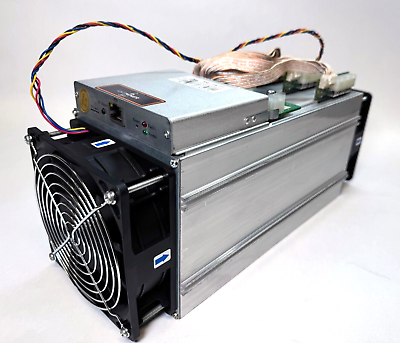
Cryptocurrency mining has gone through substantial changes because its inception, evolving from simple CPU-based operations to extremely specialized, energy-intensive endeavors. In recent years, the industry has actually dealt with installing obstacles, including escalating energy expenses, environmental concerns, and increasing competition. Nonetheless, a verifiable advance in English regarding cryptocurrency miners has actually arised, incorporating AI-optimized hardware with lasting practices how to mine bitcoin at home (Recommended Website) address these pressing issues. This development not only boosts mining performance yet likewise lines up with worldwide sustainability goals, marking a pivotal shift in the industry.
The Rise of AI-Optimized Mining Equipment
Traditional cryptocurrency mining relies on Application-Specific Integrated Circuits (ASICs) and Graphics Processing Units (GPUs), which, while powerful, are commonly stringent and energy-hungry. The current technology leverages fabricated intelligence (AI) to optimize mining hardware in real-time, drastically improving efficiency and minimizing power consumption. AI formulas assess substantial datasets, consisting of network difficulty, electrical power prices, and hardware performance, to dynamically change mining procedures. This ensures that miners run at peak effectiveness, making best use of hash rates while reducing power use.
Business like Bitmain and Canaan have actually started integrating AI chips right into their mining gears. These chips utilize device finding out to predict ideal mining setups, instantly switching in between cryptocurrencies based on profitability.
One of the most crucial objections of cryptocurrency mining is its environmental influence. The Bitcoin network alone eats more power than some tiny countries, raising problems regarding its carbon footprint. The integration of sustainable energy resources and ingenious air conditioning technologies has paved the means for sustainable mining methods.
Mining procedures in Iceland how to mine bitcoin at home and Norway harness geothermal and hydroelectric power, specifically, to run their rigs with very little ecological influence. Furthermore, advancements in fluid immersion cooling-- where mining equipment is submerged in a non-conductive liquid-- have dramatically decreased power consumption associated with air conditioning.
One more notable innovation is the surge of decentralized mining swimming pools, which attend to centralization worries and improve network protection. Conventional mining pools are often controlled by a solitary entity, presenting risks of manipulation or attacks. Decentralized pools, powered by wise agreements, disperse benefits transparently and eliminate solitary factors of failing.
Jobs like P2Pool and Stratum V2 exemplify this shift, using miners better autonomy and fairness. These platforms leverage blockchain technology to make sure that rewards are dispersed based on verifiable contributions, cultivating trust fund and partnership within the mining community.
The convergence of AI-optimized hardware, lasting practices, and decentralized systems declares a new age for cryptocurrency mining. These developments not just attend to existing challenges but additionally open brand-new possibilities for scalability and inclusivity. As the sector proceeds to introduce, miners can eagerly anticipate a future where effectiveness, sustainability, and safety are no more mutually exclusive yet important components of a flourishing ecosystem.
To conclude, the demonstrable advances in cryptocurrency mining-- ranging from AI-driven hardware to eco-friendly energy assimilation-- represent a substantial leap onward. By accepting these technologies, the market can alleviate its ecological effect, boost functional efficiency, and cultivate a much more decentralized and protected network. The future of mining is brilliant, and these developments emphasize its prospective to remain a cornerstone of the blockchain transformation.
Conventional cryptocurrency mining depends on Application-Specific Integrated Circuits (ASICs) and Video Processing Systems (GPUs), which, while powerful, are typically inflexible and energy-hungry. These chips use maker finding out to anticipate optimum mining configurations, instantly switching between cryptocurrencies based on profitability. One of the most crucial criticisms of cryptocurrency mining is its environmental impact. The convergence of AI-optimized equipment, lasting techniques, and decentralized systems advertises a brand-new age for cryptocurrency mining. In conclusion, the verifiable advancements in cryptocurrency mining-- ranging from AI-driven equipment to eco-friendly power combination-- stand for a considerable leap forward.
ASIC Miners: A Thorough Study on Their Technology, Applications, and Future Leads
Intro
Application-Specific Integrated Circuit (ASIC) miners have actually revolutionized the globe of cryptocurrency mining. These specialized equipment gadgets are developed to perform a solitary task with unmatched effectiveness: mining cryptocurrencies like Bitcoin, Litecoin, and others. Unlike general-purpose hardware such as CPUs or GPUs, ASIC miners are enhanced for certain mining algorithms, offering significant advantages in terms of speed, power performance, and success. This report delves right into the technology behind ASIC miners, their applications, benefits, challenges, and future prospects.
Modern Technology Behind ASIC Miners
ASIC miners are custom-made integrated circuits tailored for a details purpose-- in this instance, cryptocurrency mining. They are made to execute the cryptographic hash functions required for mining with optimal efficiency. The crucial technological aspects of ASIC miners include:
1. Style
ASIC miners are constructed utilizing a highly optimized design that gets rid of unnecessary components located in general-purpose cpus. This structured layout allows them to concentrate entirely on performing the repetitive hashing calculations required for mining. The style generally consists of several hashing cores, memory interfaces, and power monitoring devices.
2. Hashing Formulas
Different cryptocurrencies utilize different hashing formulas (e.g., SHA-256 for Bitcoin, Scrypt for Litecoin). ASIC miners are designed to sustain details algorithms, making them incompatible with other formulas. This expertise guarantees peak efficiency yet restrictions their adaptability.
3. Energy Effectiveness
One of one of the most substantial benefits of ASIC miners is their energy efficiency. By focusing only on mining, they eat how much does a asic miner make much less power per hash compared to CPUs or GPUs. This performance translates to lower functional prices and greater success.
4. Production Refine
ASIC miners are made making use of sophisticated semiconductor procedures, frequently at nodes as little as 7nm or 5nm. Smaller nodes permit even more transistors on a solitary chip, raising computational power while decreasing power consumption.
Applications of ASIC Miners
ASIC miners are mostly used in the cryptocurrency sector, however their applications extend past just mining:
1. Cryptocurrency Mining
The primary application of ASIC miners is to confirm transactions and protected blockchain networks with mining. They are the backbone of proof-of-work (PoW) cryptocurrencies, making sure network protection and decentralization.
2. Mining Swimming pools
Specific miners often sign up with mining swimming pools to incorporate their computational power and boost their chances of gaining rewards. ASIC miners are the favored equipment for such pools because of their high hash rates.
3. Industrial Mining Farms
Massive mining procedures, usually located in areas with cheap electrical energy, count on hundreds of ASIC miners to maximize success. These ranches dominate the mining landscape because of their economic situations of scale.
4. Research and Advancement
ASIC technology is additionally used in research study to discover brand-new cryptographic formulas and boost existing ones. Researchers research ASIC miners to recognize their restrictions and prospective improvements.
Benefits of ASIC Miners
ASIC miners supply numerous benefits over various other mining equipment:
1. High Efficiency
ASIC miners supply unparalleled hash prices, far going beyond those of CPUs and GPUs. This efficiency translates to greater possibilities of resolving cryptographic challenges and making mining rewards.
2. Energy Effectiveness
Their specialized layout makes certain marginal power wastage, minimizing electrical power prices-- a vital variable in mining profitability.
3. Longevity
While ASIC miners are made for certain formulas, their long life depends on the cryptocurrency's mining problem and network security. Well-maintained ASICs can stay profitable for years.
4. Success
Because of their high effectiveness and efficiency, ASIC miners are the most profitable option for severe miners, especially in large operations.
Obstacles and Limitations
Regardless of their benefits, ASIC miners face numerous obstacles:
1. High First Expense
ASIC miners are expensive to develop and produce, leading to high ahead of time costs for buyers. This barrier to entrance can discourage small miners.
2. Minimal Adaptability
ASIC miners are algorithm-specific, implying they can not change to mine various cryptocurrencies without hardware changes. This absence of versatility can be a significant drawback.
3. Obsolescence Threat
Fast developments in ASIC modern technology can make older versions out-of-date quickly. Miners need to continuously spend in the most up to date equipment to remain competitive.
4. Centralization Issues
The supremacy of ASIC miners in mining pools and industrial farms has raised issues regarding centralization, as a few big gamers regulate substantial portions of the network's hash power.
Future Potential customers
The future of ASIC miners is shaped by technological advancements, regulatory developments, and changes in the cryptocurrency landscape:
1. Technological Innovations
Ongoing enhancements in semiconductor technology, such as smaller sized node dimensions and extra reliable layouts, will enhance ASIC performance and energy effectiveness.
2. Different Consensus Systems
The increase of proof-of-stake (PoS) and various other consensus systems can minimize dependence on ASIC miners. Nevertheless, PoW cryptocurrencies like Bitcoin will remain to require ASIC modern technology.
3. Governing Influence
Governments worldwide are looking at cryptocurrency mining because of its energy usage. Laws can influence the fostering and release of ASIC miners.
4. Sustainability Campaigns
The market is exploring renewable power sources and even more sustainable mining practices to resolve ecological concerns connected with ASIC mining.
Final thought
ASIC miners have actually become the gold requirement for cryptocurrency mining, providing unequaled performance and performance. While they deal with challenges such as high expenses and centralization issues, their role in securing blockchain networks remains crucial. As technology advances and the cryptocurrency landscape shifts, ASIC miners will certainly remain to adjust, ensuring their significance in the years ahead. For miners and financiers alike, understanding ASIC technology is critical for browsing the dynamic world of cryptocurrency mining.
Application-Specific Integrated Circuit (ASIC) miners have transformed the globe of cryptocurrency mining. Unlike general-purpose equipment such as CPUs or GPUs, ASIC miners are enhanced for specific mining formulas, supplying significant advantages in terms of rate, energy performance, and success. ASIC miners are customized integrated circuits customized for a certain function-- in this instance, cryptocurrency mining. While ASIC miners are designed for details algorithms, their longevity depends on the cryptocurrency's mining difficulty and network security. ASIC miners have become the gold standard for cryptocurrency mining, offering unparalleled efficiency and effectiveness.
Cryptocurrency mining has actually gone through considerable makeovers in current years, driven by the need for higher performance, sustainability, and scalability. As the need for electronic currencies proceeds to increase, miners are embracing innovative modern technologies and methodologies to stay competitive and lower their environmental influence.
The heart of cryptocurrency mining hinges on the hardware used to fix complicated cryptographic problems. Traditional mining rigs, such as ASICs (Application-Specific Integrated Circuits) and GPUs (Graphics Processing Units), have actually controlled the sector for years. However, recent advancements have actually introduced more effective and energy-efficient alternatives.
One significant development is the development of Field-Programmable Gateway Ranges (FPGAs). Unlike ASICs, which are inflexible in their functionality, FPGAs can be reprogrammed to mine different cryptocurrencies, offering adaptability and future-proofing for miners. In addition, FPGAs consume significantly much less power than GPUs and ASICs, making them an eye-catching alternative for sustainable mining operations.
An additional advancement is the introduction of Quantum-Resistant Mining Hardware. With the possible hazard of quantum computing to damage conventional cryptographic formulas, suppliers are developing mining equipment efficient in dealing antminer s17 pro with power post-quantum cryptography. These gadgets ensure that mining stays secure also as quantum computer ends up being extra common.
2. Energy Effectiveness and Renewable Energy Assimilation
Energy intake has actually long been a contentious concern in cryptocurrency mining. The massive power needs of mining operations have actually drawn objection for their ecological influence. By submerging mining equipment in a non-conductive fluid, heat is dissipated a lot more successfully than traditional air cooling techniques.
The assimilation of eco-friendly power sources has actually ended up being a top priority for miners. Solar, wind, and hydroelectric power are progressively being made use of to sustain mining procedures. For example, Iceland has come to be a hub for green mining as a result of its plentiful geothermal energy. Mining farms in Texas are leveraging the state's wind power infrastructure to power their procedures sustainably.
3. Decentralized Mining Swimming Pools
Mining swimming pools have actually commonly been streamlined, with a few huge swimming pools managing a considerable portion of the network's hash rate. This centralization positions threats to the security and decentralization of blockchain networks.
These platforms enable miners to add their hash power without depending on a central authority. By distributing control amongst individuals, decentralized swimming pools reduce the threat of 51% assaults and promote a more fair distribution of rewards.
In addition, clever contract-based mining pools are emerging. These pools utilize blockchain technology to automate benefit distribution and guarantee transparency. Miners can sign up with and leave pools seamlessly, with payouts carried out instantly based upon predefined regulations.
4. AI and Device Discovering Optimization
Expert System (AI) and Artificial Intelligence (ML) are changing cryptocurrency mining by optimizing operations and anticipating market patterns. Advanced formulas can evaluate large amounts of data to identify one of the most profitable coins to mine at any given time.
flexible mining formulas usage ML to switch over in between cryptocurrencies based upon real-time productivity metrics. This dynamic method maximizes returns while decreasing power waste. Business like Hive Blockchain Technologies are leveraging AI to enhance their mining approaches, resulting in higher performance and success.
AI is also being made use of to predict equipment failures and routine maintenance proactively. By monitoring temperature level, power usage, and efficiency metrics, AI systems can determine possible concerns prior to they result in downtime, guaranteeing continual procedure.
5. Governing Compliance and Lasting Practices
As governments globally inspect the cryptocurrency industry, miners are adopting practices to guarantee compliance with laws. This consists of Know Your Consumer (KYC) and Anti-Money Laundering (AML) procedures for mining pool individuals.
The Crypto Climate Accord is an initiative intended at attaining net-zero exhausts for the cryptocurrency sector by 2030. Miners are progressively taking part in such programs, adopting carbon countering actions and transparent coverage of their power usage.
6. Side Mining and IoT Integration
While private gadgets supply minimal computational power, jointly, they can develop a considerable mining pressure.
Jobs like Helium demonstrate the potential of IoT mining. Helium's network counts on IoT tools to give cordless coverage, satisfying participants with cryptocurrency. This model not only decentralizes mining yet likewise develops real-world energy for the network.
7. Proof-of-Stake (PoS) and Crossbreed Agreement Devices
While Proof-of-Work (PoW) continues to be the dominant consensus device for mining, Proof-of-Stake (PoS) and hybrid models are obtaining appeal. PoS gets rid of the need for energy-intensive mining by enabling validators to develop blocks based upon their stake in the network.
Ethereum's transition to PoS (Ethereum 2.0) is a spots instance. This change minimizes the network's power intake by over 99%, setting a precedent for other cryptocurrencies.
The cryptocurrency mining market is evolving rapidly, driven by technical development and the need for sustainability. From next-generation hardware and renewable energy assimilation to decentralized swimming pools and AI optimization, these developments are reshaping the landscape. As the industry remains to develop, miners that embrace these advancements will certainly not only enhance their profitability however likewise add to a more lasting and decentralized future for cryptocurrency.
The heart of cryptocurrency mining lies in the equipment used to resolve intricate cryptographic challenges. Power intake has actually long been a controversial concern in cryptocurrency mining. Iceland has actually ended up being a hub for eco-friendly mining due to its plentiful geothermal power. Mining swimming pools have generally been streamlined, with a few big pools controlling a considerable section of the network's hash price. The cryptocurrency mining market is advancing rapidly, driven by technological development and the demand for sustainability.