Запись блога пользователя «Bea Lemke»
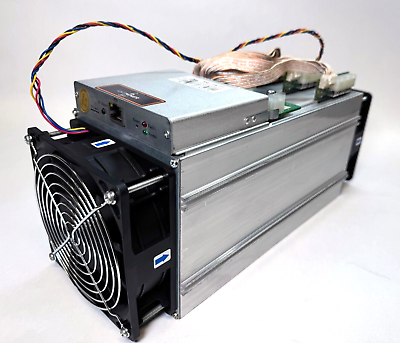
Cryptocurrency mining has gone through substantial changes because its inception, evolving from simple CPU-based operations to extremely specialized, energy-intensive endeavors. In recent years, the industry has actually dealt with installing obstacles, including escalating energy expenses, environmental concerns, and increasing competition. Nonetheless, a verifiable advance in English regarding cryptocurrency miners has actually arised, incorporating AI-optimized hardware with lasting practices how to mine bitcoin at home (Recommended Website) address these pressing issues. This development not only boosts mining performance yet likewise lines up with worldwide sustainability goals, marking a pivotal shift in the industry.
The Rise of AI-Optimized Mining Equipment
Traditional cryptocurrency mining relies on Application-Specific Integrated Circuits (ASICs) and Graphics Processing Units (GPUs), which, while powerful, are commonly stringent and energy-hungry. The current technology leverages fabricated intelligence (AI) to optimize mining hardware in real-time, drastically improving efficiency and minimizing power consumption. AI formulas assess substantial datasets, consisting of network difficulty, electrical power prices, and hardware performance, to dynamically change mining procedures. This ensures that miners run at peak effectiveness, making best use of hash rates while reducing power use.
Business like Bitmain and Canaan have actually started integrating AI chips right into their mining gears. These chips utilize device finding out to predict ideal mining setups, instantly switching in between cryptocurrencies based on profitability.
One of the most crucial objections of cryptocurrency mining is its environmental influence. The Bitcoin network alone eats more power than some tiny countries, raising problems regarding its carbon footprint. The integration of sustainable energy resources and ingenious air conditioning technologies has paved the means for sustainable mining methods.
Mining procedures in Iceland how to mine bitcoin at home and Norway harness geothermal and hydroelectric power, specifically, to run their rigs with very little ecological influence. Furthermore, advancements in fluid immersion cooling-- where mining equipment is submerged in a non-conductive liquid-- have dramatically decreased power consumption associated with air conditioning.
One more notable innovation is the surge of decentralized mining swimming pools, which attend to centralization worries and improve network protection. Conventional mining pools are often controlled by a solitary entity, presenting risks of manipulation or attacks. Decentralized pools, powered by wise agreements, disperse benefits transparently and eliminate solitary factors of failing.
Jobs like P2Pool and Stratum V2 exemplify this shift, using miners better autonomy and fairness. These platforms leverage blockchain technology to make sure that rewards are dispersed based on verifiable contributions, cultivating trust fund and partnership within the mining community.
The convergence of AI-optimized hardware, lasting practices, and decentralized systems declares a new age for cryptocurrency mining. These developments not just attend to existing challenges but additionally open brand-new possibilities for scalability and inclusivity. As the sector proceeds to introduce, miners can eagerly anticipate a future where effectiveness, sustainability, and safety are no more mutually exclusive yet important components of a flourishing ecosystem.
To conclude, the demonstrable advances in cryptocurrency mining-- ranging from AI-driven hardware to eco-friendly energy assimilation-- represent a substantial leap onward. By accepting these technologies, the market can alleviate its ecological effect, boost functional efficiency, and cultivate a much more decentralized and protected network. The future of mining is brilliant, and these developments emphasize its prospective to remain a cornerstone of the blockchain transformation.
Conventional cryptocurrency mining depends on Application-Specific Integrated Circuits (ASICs) and Video Processing Systems (GPUs), which, while powerful, are typically inflexible and energy-hungry. These chips use maker finding out to anticipate optimum mining configurations, instantly switching between cryptocurrencies based on profitability. One of the most crucial criticisms of cryptocurrency mining is its environmental impact. The convergence of AI-optimized equipment, lasting techniques, and decentralized systems advertises a brand-new age for cryptocurrency mining. In conclusion, the verifiable advancements in cryptocurrency mining-- ranging from AI-driven equipment to eco-friendly power combination-- stand for a considerable leap forward.