Blog entry by Therese London
Introduction
Cryptocurrency mining, the process of verifying transactions and protecting blockchain networks via computational power, has actually emerged as a keystone of the electronic economy. While it enables decentralized money and innovation, its environmental, financial, and regulatory implications have actually triggered international debate. This study explores the advancement of crypto mining, focusing on its energy intake difficulties, technological improvements, and the quest of sustainability via real-world instances.
Background: The Mechanics of Crypto Mining
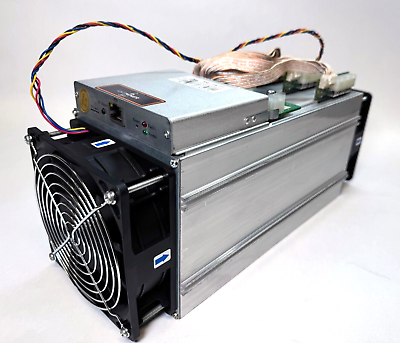
Crypto mining entails solving complicated mathematical challenges to include blocks to a blockchain, fulfilling miners with symbols like Bitcoin or what is Mining bitcoin Ethereum. The procedure depends on specialized equipment, such as Application-Specific Integrated Circuits (ASICs) or Graphics Processing Devices (GPUs), which require significant electricity. Early mining procedures were small, but as cryptocurrencies gained value, industrial-scale farms arised, taking in energy equivalent to tiny nations.
Instance Study: GreenHash Mining's Change to Renewable resource
GreenHash Mining, a mid-sized mining firm based in Sweden, exhibits the change towards sustainable techniques. Founded in 2018, the firm at first operated using coal-powered power in Kazakhstan. Mounting criticism over carbon footprints and regulative pressures triggered a strategic pivot.
In 2021, GreenHash moved to northern Sweden, leveraging the area's abundant hydropower and geothermal resources. By partnering with regional energy suppliers, the business protected accessibility to 95% sustainable electrical energy at affordable rates. Its center, housed in a repurposed paper mill, uses excess warm from what Is mining bitcoin gears to warm nearby household locations-- a practice referred to as "warmth recycling."
Environmental Influence and Advancements
Crypto mining's power usage continues to be contentious. According to the Cambridge Bitcoin Electricity Usage Index, Bitcoin alone takes in over 120 TWh yearly-- more than Norway's overall usage. GreenHash's shift decreased its carbon discharges by 80%, however difficulties continue. Mining equipment still creates electronic waste (e-waste), with ASICs lapsing every 1.5-- 2 years.
To resolve this, GreenHash carried out a round economic climate design. It works together with reusing companies to recoup steels from defunct equipment and donates reconditioned GPUs to schools. Furthermore, the company tests immersion cooling technology, submerging equipment in naturally degradable coolant to reduce energy usage by 40%.
Economic Factors To Consider and Market Volatility
Productivity in crypto mining depends upon elements like token prices, electrical energy prices, and equipment effectiveness. The 2022 crypto market collision, which saw Bitcoin's value decrease 65%, forced numerous miners into personal bankruptcy. GreenHash survived by hedging energy agreements and expanding income streams, including offering cloud mining services and blockchain working as a consultant.
Government plans likewise play a function. Nations like Iceland and Canada draw in miners with economical renewables, while others, like China, have outlawed mining outright. Sweden, where GreenHash operates, presented tax obligation incentives for sustainable information centers, positioning itself as a hub for green mining.
Regulatory and Social Obstacles
Crypto mining encounters analysis over its ecological influence and power prioritization. In 2022, protests appeared in New York over a gas-powered mining facility reactivating a retired coal plant. Alternatively, GreenHash's community-focused method-- such as funding regional institutions and organizing public seminars on blockchain-- has gathered public assistance.
Laws remain fragmented. The European Union's Markets in Crypto-Assets (MiCA) framework mandates environmental disclosures for mining companies, while the United state implements state-level policies.
Advancements are reshaping mining's feasibility. Ethereum's 2022 transition to proof-of-stake (PoS) reduced its power usage by 99%, though Bitcoin preserves its energy-intensive proof-of-work (PoW) design. Startups like Soluna build wind-powered mining farms, while others discover utilizing stranded energy-- such as flared gas-- to power remote procedures.
GreenHash plans to incorporate AI-driven energy monitoring systems, maximizing power usage in actual time. It likewise experiments with decentralized grids, enabling excess renewable power from solar/wind farms to be drawn away to mining throughout low-demand durations.
Conclusion
Crypto mining sits at the junction of technology, financing, and sustainability. While its energy needs pose risks, situations like GreenHash demonstrate that renewable combination and technology can alleviate environmental damage. Success pivots on cooperation in between miners, federal governments, and areas to balance economic growth with eco-friendly responsibility. As blockchain innovation advances, the mining sector have to prioritize versatility, transparency, and long-term sustainability to thrive in the digital age.
 Crypto mining includes addressing intricate mathematical problems to add blocks to a blockchain, satisfying miners with tokens like Bitcoin or Ethereum. GreenHash Mining, a mid-sized mining firm based in Sweden, exemplifies the shift toward lasting techniques. Crypto mining's power intake remains controversial. Success in crypto mining pivots on factors like token prices, power costs, and equipment performance. Crypto mining deals with examination over its ecological influence and energy prioritization.